The strongest practical learning sessions do not begin with a long lecture. They begin with a question that gives the technology a purpose. What needs to move? What information would help? Who experiences this problem, and what would make a solution genuinely useful?
Start with a problem worth understanding
When girls begin with a real need, coding and robotics become tools for thinking rather than isolated subjects. The facilitator helps the group observe the challenge, identify what is known and decide what must be tested. This gives every technical choice a reason.
Projects may draw on programming, robotics, electronics, artificial intelligence, design or digital storytelling. The tool can change. The learning process remains grounded in curiosity, evidence and iteration.
Build understanding by using it
A session introduces only the knowledge needed to help the team take the next meaningful step. Girls then use that knowledge while the idea is still fresh. A typical learning rhythm looks like this:
- Frame the challenge and agree on the goal
- Explore one new concept or tool
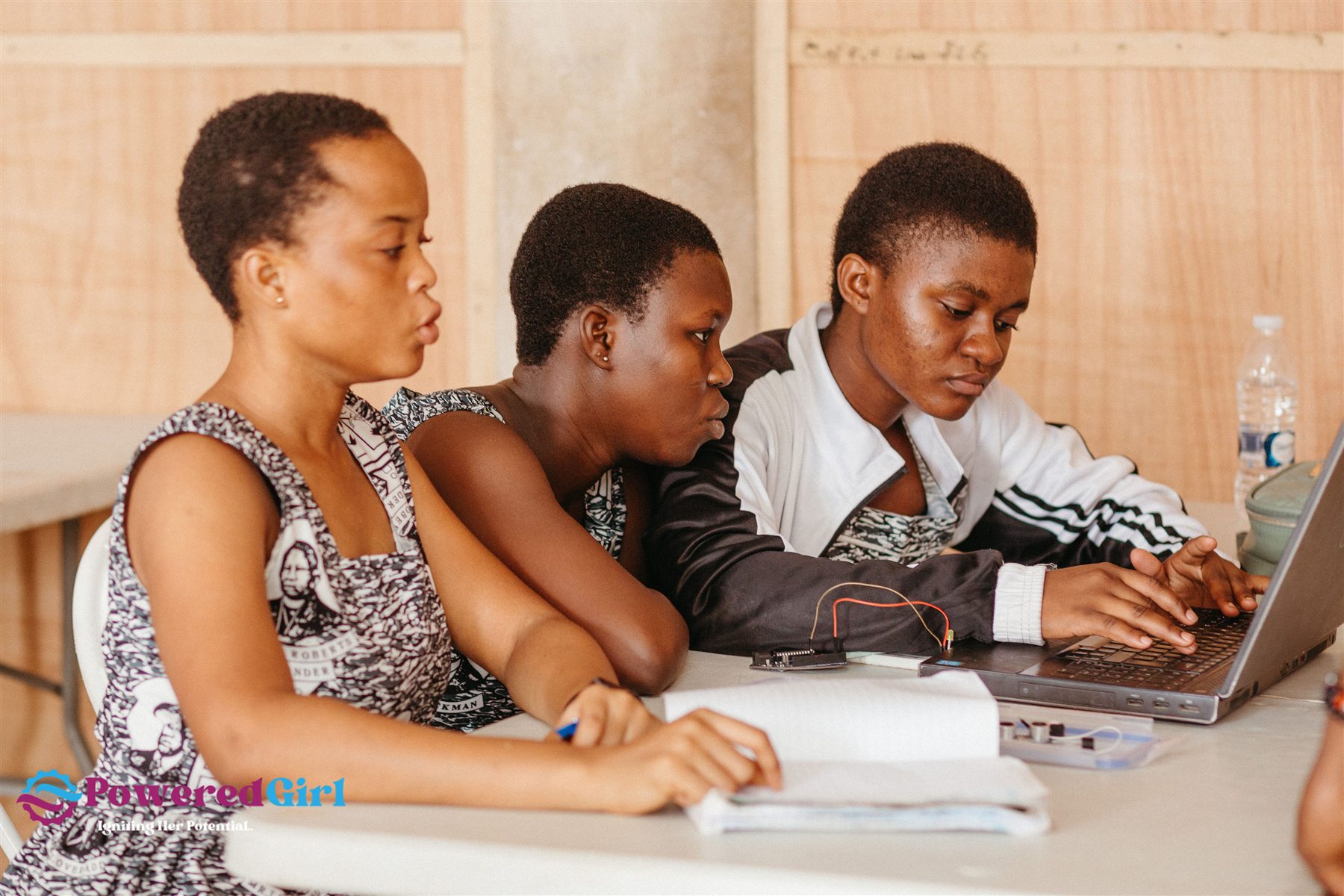
- Build a first version in small teams
- Test what works and identify what does not
- Improve the design using evidence
- Present the result and reflect on the process
This rhythm makes progress visible. It also makes mistakes useful. A failed test is not the end of the activity. It is information that helps the team decide what to change.
The goal is not to copy a perfect answer. The goal is to make thoughtful decisions and learn from what the prototype reveals.
Collaboration is a technical skill
Team projects help girls practise more than task sharing. They learn to describe an idea precisely, listen for information they may have missed, question an assumption respectfully and document the decisions that shape the build.
Roles can rotate so that every participant experiences different parts of the process. One girl may guide the code, another may track tests, another may shape the user experience and another may present. Over time, each learner should have opportunities to lead, build, question and explain.
Presentation completes the learning cycle
Explaining a project reveals what a learner understands. Girls describe the problem, demonstrate the prototype and respond to questions about their choices. This turns public speaking into part of technical practice, not a separate activity saved for the end of a programme.
Reflection creates the next step
Before the session closes, the group considers what changed between the first idea and the final version. What evidence influenced the team? Which part was difficult? What would they try with more time? What new skill do they want to practise next?
Those questions help a girl recognise her own growth. She leaves with more than a finished activity. She leaves with a clearer picture of how she learns, contributes and solves problems with others.
Help a girl turn curiosity into practical skill and a visible next step.
Join Powered Girl